Showing posts with label movie. Show all posts

Sunday, June 21, 2015

IMDb #185 Review: The Grand Budapest Hotel (2014)

Source: Wikipedia
Acclaimed auteur Wes Anderson cooks up a blindingly colorful tragicomedy, by packing it with rectangles and spectacular cinematography that even a movie dunce such as yours truly can detect.

Generations ago, in our story-within-a-story-within-a-story, a naive pencil-mustached lobby boy receives tutelage from the staggeringly overqualified concierge of the titular hotel. In their Europe, fictional countries blend with real ones, just as bizarrely beautiful contrivances mingle freely with pitch-black comedy and brutal realism, sweetening but never sugarcoating.

The concierge enjoys amorous affairs with wealthy old ladies. Until one paramour's timely death pits him against her awful family of cartoon villains. He and the lobby boy embark on a quest to find the hidden will and save a priceless painting. Together the characters spend a disproportionate amount of time away from the titular hotel. Meanwhile, their fictional European nation undergoes a coup, which floods the train systems with humorless men with machine guns and itchy trigger fingers.

The pace swishes along at a crisp, brisk trot. Manic antics are executed with deadpan flair. The sets scintillate with symmetry and dazzling architecture; even the detention facility is picturesque. Obscenities fly in the rapid-fire, wit-charged dialogues.

If the blunt humor and dizzying speed don't put you off, there's a brilliant story in there somewhere. An unconventional romance, an eloquent comedy, a completely unexpected suspenseful thriller. Which makes it even more soul-crushing when bleak reality ensues and that delightful world evaporates and the hotel becomes the drab ruin you knew it would become all along because you paid attention in the beginning.

100 minutes.

Friday, June 19, 2015

IMDb #187 Review: Amores Perros (2000)

Source: Wikipedia
In gritty turn-of-the-millennium Guadalajara, three ugly yet beautifully intricate stories intertwine like tangles of Rottweiler guts spilled in the street.

We burst on the scene with a frenetic car chase and a gruesome wreck. (Best get used to the sight; it grows more emotionally destructive with each repeated viewing from a fresh perspective.)

The disjointed procession of depressing scenarios interlocks like a patchwork quilt. Sometimes it hurts to watch, like using the patchwork quilt to stuff back in the aforementioned Rottweiler guts. But it's stitched cleanly: seamlessly, with none of the gangrene of narrative muddling.

A ghetto guy lusts for his douchebag bro's hot wife, so he stacks up mad cash at the dogfighting pits...with his brother's dog. Meanwhile, the douchebag bro/husband works as a cash register monkey, moonlights as a petty storefront robber, and shamelessly philanders on the side. Also cheating on his wife is a kindly middle-class family man with two young daughters. Elsewhere, a fashion model suffers a debilitating injury and loses her dog under the floorboards (it's, uh...serious business). A small, nervous businessman offers big money to murder his business partner/half-brother. And, most mysterious of all, a hairy, wild-eyed old man lurks at the edges of the crowd, waiting for...something.

It's the best Spanish soap opera of all time.

The contrived coincidences veer toward the cruel and cynical; I swear the universe is out to destroy these people. The twisted romances depict human selfishness at its most ignoble. And the melodrama gets a free pass as painfully realistic reactions to unthinkably awful worst-case scenarios.

And when the whole picture unfolds, we can finally appreciate the Frankenstein monstrosity in its entirety. Naked, tortured, bestially intelligent, ugly yet beautiful in its intricacy.

153 minutes.

Thursday, June 18, 2015

IMDb #188 Review: In the Name of the Father (1993)

Source: Wikipedia
Since it is set in turbulent twentieth century Ireland, this movie starts in medias res with a bang, gets back to the bang, then features a series of smaller, more emotionally potent bangs till the closing credits.

The hero, a longhaired punk, lives in IRA-ravaged Belfast with his buds. Their white-collar dads ship them off to London to grow up. Every fun thing our hero does there acquires sobering significance. He shacks up with a hippy commune. He plunders a hooker's sex dungeon. Homeless and penniless, he squabbles with a hobo over a monogrammed bench.

Then a pub blows up. He's extradited from Ireland. Through torture, the British justice system (composed entirely of angry men in suits) convicts him of the bombing. Moreover, his family and friends are railroaded as criminal associates.

The courtroom drama transitions to a prison drama. As cellmates, the straitlaced dad and wayward son get all the quality time they were missing. Years and years and years of it. Even after the justice system catches and convicts and incarcerates the real IRA pub-bombers.

Furious yet? Good. Because it's based on a true story, which manages to be even more depressing.

The film dodges melodrama by rays of hope. Inspiring moments of prisoner solidarity. Picketing protesters and a lone lawyer campaigning for their release. The emotional yo-yo of a strained father-son relationship. Intense instances of Daniel Day-Lewis's insane method acting.

And when the critical evidence comes to light, your heart spreads broken wings and soars. Kinda. Then the ending, and the awful reality behind it, sticks in your chest like a pulmonary embolism.

133 minutes.

Wednesday, June 17, 2015

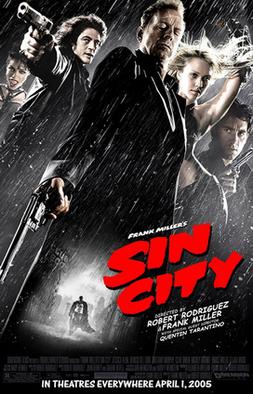
IMDb #189 Review: Sin City (2005)

Source: Wikipedia
In Frank Miller's neo-noir wannabe Vegas, grittiness masquerades as realism, but pulls it off with such style it's tough to resist succumbing to entertainment.

The extended edition features several stories, told out of chronological order. They focus on different festering wounds of human morality, but feature the same bitterly heroic triumph. Hope you like end credits--you'll see 'em three times (four, counting a punchy short film). Acceptable, because the end credits theme is fantastic.

If you've read the graphic novels, it's practically a shot-for-shot adaptation. The same dudes get plugged from the same camera angles. The same cynicism chokes the atmosphere. The same dialogue sparkles with blindingly poetic polish. Frank Miller's obsession is still whores setting back feminism several centuries.

Like goodness in a horrible world, the modified black-and-white emphasizes splashes of color. Blood, fat red lips, more blood, and a certain deformed yellow midget (not a racist metaphor, probably). Optimism is crushed, beauty abused, nobility punished. Every vice you can imagine gets its moment in the spotlight, which falls off the lighting grid and shatters and showers the audience in scalding glass shards.

Some disparities stick out like broken thumbs. Such as reconciling the stylized violence with the purported realism. And portraying strong woman sexually -- such as the armed-to-the-teeth prostitutes of Old Town -- masks exploitation as empowerment. It just replaces one fantasy with another, admittedly cooler fantasy. Also, lady nipples are apparently Hollywood kosher, but male genitalia is a big wrinkly no-no.

Even if you despise the stories, the twisted characters are worth it. Talented actors portray these cartoons with such aplomb, it's mesmerizing, and almost believable. Too much verisimilitude would spoil the effect anyway.

124 minutes.

Tuesday, June 16, 2015

IMDb #190 Review: The Grapes of Wrath (1940)

Source: Wikipedia
A destitute farming family moves to keep from starving and getting pushed around by rich jerks in Dust Bowl Oklahoma--so they can starve and get pushed around around by rich jerks in California.

They travel Route 66 in their crappy truck packed with everything they own. The grandparents drop off. With grim determination and rustic wisdom, the family chases vague promises of shitty jobs. (Spoiler: the jobs are even shittier than advertised. The living conditions are worse. And it only gets shittier from there.)

Along the road, store proprietors take pity on the weary rustics and their hungry children, who resemble grubby refugees from a Dickens novel. The small business owners dispense underpriced candy and brusque charity.

The truck gurgles and lurches into California, the promised land of milk and honey. But the honey's thin soup and the milk is filthy water, and the only promise left unbroken is the ever-deflating wages for picking fruit. Okie transient camps pop up, terrorized by overzealous militia police on the corporate payroll. But the little people stick together.

A grim pallor of "God is dead" hangs over the whole shebang, not just because a major character is a lapsed preacher. Like the dust choking the crops, tangible desperation strangles any hope of lasting happiness or relief from suffering. But the people soldier on--because they must.

As a lucky sap who never read the book in high school, I liked the adaptation. John Ford's black-and-white contributes to mood, aided by subtly ingenious lighting. The titular trampled grapes ferment into a  fine wine of bittersweet existentialism. Which means it tastes awful but sits nicely and aids bowel movements.

129 minutes.

Monday, June 15, 2015

IMDb #191 Review: Million Dollar Baby (1994)

Source: Wikipedia
Can a thirty-something trailer-trash Southern gal become the world champion welterweight prizefighter through sheer grit? Well, depends. If you ask Clint Eastwood (director/actor/composer), the answer is a resonant, growly, "Depends."

As a grizzled ex-trainer, old Clint runs an ailing failing gym packed with wannabe fighters. A perky lady shows up, punches bags, knowing nothing about the sport. So Clint proffers gruff advice. Morgan Freeman, the kindly janitor/ex-fighter/Magic Negro archetype, offers more direct assistance, such as a secondhand speed bag and a movie narration.

Armed with nothing but optimism, the girl plunks into the ring. Being a natural heroine, she dominates.

Clint, who's learning Gaelic for no apparent reason, dubs her with a Gaelic moniker, which only gets translated when the narrative decides it's expedient. The fake Irish lass accumulates a measure of fame. Success hardly touches her family, a pack of lazy ungrateful shitheads who just want her money.

The real growth arc occurs between Clint and his champ. They're a convenient match--grouch and sweetheart, old man and young woman, daughter issues and daddy issues.

The championship fight happens almost as an afterthought.

Like Rocky, the quintessential boxing movie, the goal isn't winning, but proving yourself. Good, because she's got nothing left but the fights. Therefore, the anticlimax doesn't depict the final fight, but the consequences, of success or failure or whatever. And the consequences hurt.

If you're looking for a goofy uplifting live-action cartoon, watch a Rocky sequel. If you're looking for a manic-depressive gender-flipped *original* Rocky...our boy Clint might be able to help you out.

132 minutes.

Sunday, June 14, 2015

IMDb #192 Review: Persona (1966)

Source: Wikipedia
WHAT THE UNFATHOMABLE FUCK WAS TH--oh, it's over already. Cool.

As summarized above, the Swedes toss us another bizarre psychological drama sandwiched between montages of surreal imagery. It just oozes bullshit symbolism. Film reels; giant spiders; baby lambs; dead people; a sad boy reading in bed; crucifixion. What does it mean, Ingmar Bergman. Who cares, you're dead.

The discernible story involves an actress. She cuts off communication with the outside world, by writing or speaking or even emoting. A nurse tends to her, then takes her on a beach trip. To get the actress talking, the nurse starts talking. A lot. The one-sided conversation waxes terrifyingly personal, such as orgy stories and other such dalliances.

When the actress finally speaks, it turns out--surprise--she's an insufferable bitch. This display is just another act.

SUDDENLY DANCING SKELETON SUITS, SCREECHY MUSIC, MORE CRUCIFIXION, WHAT THE HELL AM I WATCHING?

Back to monotone conversations. This I can handle.

The best/worst scene sticks in my head. A whole conversation lingers on a still shot of one woman's expressionless face. Then, the film repeats the same conversation, just aimed at the other woman's face. The acting is so subtle you might miss it entirely.

Rambling conversation bandies about various themes: fluidity of identity, the pains of pregnancy/abortion/childbirth, nihilism. Sometimes, the philosophically dense girl-talk breaks out in physical violence, as they tend to. The nurse shakes the actress, beats her against a table, slaps her, scrapes her fingernails on her arm, draws blood, sucks the blood...

No, I did not understand this movie.

In the end, the actress and nurse realize they are the same. I think.

Because clear communication would ruin the artsy fun.

84 minutes.

Saturday, June 13, 2015

IMDb #193 Review: Hachi: A Dog's Tale (2009)

Source: Wikipedia
This super-saccharine sorta-true story tastes like a marshmallow pie with a needle in it.

A music prof picks up an abandoned puppy at a train station. The wife freaks out--she cranks up the marital strife thermostat until puppy love infects her too. Nobody claims the pup; the pound would give him two weeks, then ice him. So, adoption remains an option. The pet grows on the family like a fuzzy tumor.

The titular pooch, as the hero dude discovers using the arcane pre-Google Internet, is a rare and ancient breed from Japan. His token Japanese friend/kendo buddy (what, you don't have one?) says the breed is smart, loyal, and sucks at fetch.

Instead, Hachi proves adept at escaping: dig under the fence, hop over it, or even open the latch like a tiny furry velociraptor. He experiences the abounding love of the small town's inhabitants via knee-high shaky-cam monochromatic dog-o-vision.

Merely commuting to work becomes a recipe for canine hijinks.

But the dog grows up. The kids grows up. This being a family picture, innocuous physical comedy spontaneously generates. Such as some dude awkwardly attempting to woo the musician's daughter.

THEN TRAGEDY STRIKES. Without warning, with staggering consequences, as it tends to.

The second half of the movie is nonstop sentimental longing for the first half. The lilting piano refrain tugs on the heartstrings with dull little teeth.

Gimmicky? Hell to the yes. It's indisputably crack for dog lovers, laced with sentimentality and possibly tear gas.

The film sparkles with family friendliness, aside from implied marital intercourse and, you know, acknowledgement that death exists.

So we watch nice people be nice people, then suffer and die for no explicit reason. The proffered treatment for grief is to dig your heels into the dirt and never let go of the happy past. Because of course that'll bring it back. Nah, it's just easier than moving on.

On which note, moving on.

93 minutes.

Friday, June 12, 2015

IMDb #194 Review: The Wizard of Oz (1939)

Source: Wikipedia
While suffering through this classic for the first time since childhood, a realization struck me: This shit is whack, yo.

A whiny, weepy farm girl annoys her aunt and uncle by bothering the three farm hands, who not-so-obscurely reference their Oz counterparts. The girl rescues her Cairn Terrier from a nasty old widow with nothing better to do than abuse dogs. Then the girl visits a sham psychic, who introduces her to happy lies, then a tornado, which introduces her to blunt force trauma.

Unfortunately, Dorothy survives, and wakes in the Technicolor land of Oz, whose effects blew minds three generations ago. Underpaid midget actors squawk doggerel and cavort about in absurd getups. The dubiously "good" witch, who travels via personalized rainbow bubble, sends Dorothy on a quest to Green Dildo Metropolis, hopefully to finish her off.

Clearly, the movie is about a covert assassination ploy, to erase the Dorothy and "wicked" witch via mutually assured destruction. Why? To maintain the Wizard's candy-coated totalitarian regime. Seriously, while the Munchkins slave away, the Emerald City dweebs work ONE HOUR every day. The bastards brag about it...in song.

In their journey, Dorothy and her far more intelligent dog garner an iconic collection of socially crippled nitwits. To solve their collective neuroses, they seek the Wizard-Ex-Machina, who turns out to be a flame-belching, smoke-burping, broccoli-headed hologram. The wrinkly old bullshit artist turns out to be a refreshing breath of hot air.

The wicked witch hams the hell out of her role, then dies stupidly.

The balance of camp, unforgettably dumb music, and unintentional nightmare fuel improbably result in a timeless children's classic.

Other weird details:

  • The scarecrow carries a .45 revolver into the witch's castle
  • The lion's an insomniac
  • The trees suddenly ignore Dorothy when she discovers the Tin Man
  • Speaking of Dorothy, she does nothing for the plot, which men and witches solve for her
  • The film is dedicated to "The Young in Heart," which probably means Soft in Noggin
101 minutes.

Thursday, June 11, 2015

IMDb #195 Review: The Best Years of Our Lives (1946)

Source: Wikipedia
Though seldom depicted onscreen, the final battle of World War II was fought in suburban America. Rehabilitation. Battered soldiers resume civilian life, moving from danger and mayhem to soul-sucking mundanity.

Three guys returning from war discover they came from the same time. They bear their battle scars in different ways. One guy misses the glory days and camaraderie; one guy misses his sweetheart, who didn't miss him; one guy misses having hands.

The setting feels like peering into a time capsule, but the problems sting of the painfully familiar. Nobody uses words like "depression," "alcoholism," "nicotine addiction," "veteran unemployment," or "post-traumatic stress disorder." But here we are. If these weren't the supposedly "good old days" of American culture (with unbelievably low supermarket prices), I'd think it fresh and timely.

The lovelorn officer, who dropped bombs on Huns instead of garnering occupational training, works in a drugstore. The handless wonder becomes an untouchable, the target with poisoned kindness, when he just wants to be treated like anybody else. The proud father fends off nightmares with booze abuse and chumming with his newfound military buddies. Because they understand.

Of course the people who stayed behind can't understand how much war changed them.

To balance out the crushing realism, there's a discount package of romantic subplots, such as a mutual instance of marital infidelity. To meet the movie drama quotient, you know. The chief instigator: a blonde chatterbox fond of military men and of frittering away Uncle Sam's money.

The result is three hours of falling smiles. When those smiles land and break, the crushed remains coagulate into bittersweet half-smiles. Hardly a glamorous postwar movie, but it's sincere, heartfelt. It grants a glimpse into a world long gone, with pains that remain alarmingly relevant.

172 minutes.

Wednesday, June 10, 2015

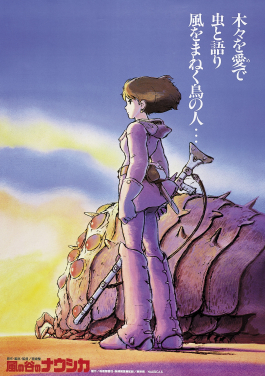
IMDb #196 Review: Nausicaä of the Valley of the Wind (1984)

Source: Wikpiedia
Miyazaki's first original movie establishes the blueprint for all the others to follow. Kickass heroine? Top-notch animation, music, storytelling? Heavy-handed environmentalist subtext? Gratuitous flight sequences? All that and more.

As the clunky opening narration informs us, the evil industrialist society was razed by fire-puking Evangelion prototypes. In the resultant wasteland, agrarians eke out a meek existence in the Valley of the Wind, where the sea breeze wafts away poisonous spores.

The dominant species on this hellish world is the gigantic psychic trilobites who've never heard of the Square Cube Law.

The titular heroine loves these freakish physical anomalies. She's so self-sacrificial, so all-embracing, her Messiah complex could engulf planets. Though her name stems from a minor character in Homer's Odyssey, her odyssey is quite different: save every insect, every human. She talks to herself a lot, and to animals. She's no Gandhi, as her kill list attests. But her weepiness shows she at least feels bad about it.

Chocobo-riding Gandalf brings bad news to the idyllic village. The evil morally ambiguous empire is spreading, and so is the toxic jungle. Coincidentally, a foreign airship crashes in their valley, leaving an embryonic humanoid bio-weapon. The evil empire wants this thing. So the messianic princess Nausicaä goes with the morally ambiguous empire princess on adventures. Like getting involved in stratospheric airship battles, picking up an unnecessary totally-not-a-love-interest (voiced by Shia LaBoeuf?!), and incrementally advancing the plot.

Meanwhile the village in the valley rankles against their imperial overlords, especially the princess's assistant, a deliciously cynical coward. Via politically complex shenanigans, they end up in the path of a rampaging herd of pissed-off giant psychic trilobites. It happens.

The animation isn't as polished as Spirited Away, but for the eighties, it's magnificent. The music isn't my favorite of Joe Hisaishi's, but it's still splendid. And the spotty, stuffy English script is wonky but workable. (Go Disney dubs!)

The only real surprise in store is how astonished the characters are that our messianic archetype protagonist fulfills the requisite ancient prophecy.

117 minutes.

Tuesday, June 9, 2015

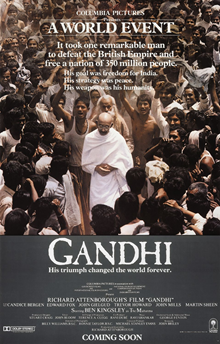
IMDb #197 Review: Gandhi (1982)

Source: Wikipedia
In three mere hours, we blaze through the productive periods of the twentieth century's most prominent pacifist/Brit hater, as played admirably by a British thespian/white guy. Enormous, magnificently realized, it's a uniquely British adaptation of a dark chapter of British history.

Naturally, the hero's life story begins with his underwhelming assassination, then the overwhelming funeral possession. How did one small, bald, brown man garner so much love?

Well, he starts as an unremarkable attorney in South Africa. As he practices law to feed his wife and children--things that don't make people famous--he fights for the rights of Indians. He pursues this ambiguous goal by appealing to an ambiguous nondenominational God, preaching and practicing nonviolence, and flouting British imperialism. What's the best place to fight for Indian rights? India. How do you reach the Indians? Look like one.

Unfortunately, India's enormous. A tiny pack of wannabe independents can't represent the whole of the nation, let alone unite it. (Even though, by saying so, Mr. Gandhi does so.) The "half-naked whatever-he-is" attains mythic status in his own lifetime. But his opponents (and their guns) are less keen on his nonviolent stance.

It's an inspiring journey, albeit rife with setbacks. Multiple arrests, mob violence, outright massacres. And the Mahatma reacts to horrible news with solemn dignity. Counter-intuitively, Gandhi retaliates with hunger strikes, or a call to starve the colonial economy by weaving your own cloth or making your own salt from the sea. Amazingly, when the man threatens self-harm, all of India just freezes, begging him to stop.

Does nonviolence work? The riot mobs would disagree. So would the freshly forged state of Pakistan, and the looming World War, and a certain disgruntled gunman from the prologue. But everybody adored the man Gandhi, even if they ignored every word he said.

188 minutes.

Monday, June 8, 2015

IMDb #198 Review: The Avengers (2012)

Source: Wikipedia
Disney's money-printing Marvel movie franchises collide to spawn a mega-franchise that threatens to engulf all of Hollywood in its event horizon. And they make us love it.

At a "secret" facility that studies artifacts of comic book science, eyepatch Samuel L. Jackson shouts orders and spouts technobabble. Splendiferous CGI summons the morally ambiguous sympathetic villain. Shit goes down. Loki now wields a world-bridging stick. He later unironically monologues to Germans (in English) about humanity's secret craving for enslavement.

Meanwhile, the stupidly-named organization SHIELD rounds up the superheros onto a physics-flouting aircraft carrier, presumably to prevent their massive superhero egos from igniting the ozone layer. The manly heroes fight each other for trailer-tastic motivations. While ordinary humans Black Widow and Hawkeye, who don't (yet?) have their own movies, struggle to remain relevant.

Joss Whedon's directorial thumbprint lingers: improbably witty conversations, angst, and women's feet (hi Pepper Potts, bye Pepper Potts). The villain indulges in antiquated vulgarity ("mewling quim"). And, in case you haven't heard, a side character's nerdiness becomes plot relevant as an excuse to capitalize on tragedy for strategic deception. (Say it with me now: USA! USA!)

But the final fight exceeds description. A cyborg lizard army drops from the sky. Thus commences forty minutes of punching and explosions. The destruction to NYC makes 9/11 look like spilled milk.

There's no social injustice to castigate, no political agenda to promulgate (except perhaps government-mandated superhero insurance). Just pretty people in silly suits smacking each other and cookie-cutter CGI baddies. It's glorious. And despite the gimmicky sheen, with the teasers and continuity nods and Stan Lee cameos, it works.

143 minutes.

Sunday, June 7, 2015

IMDb #199 Review: Guardians of the Galaxy (2014)

Source: Wikipedia
The Marvel movie money machine transmogrifies a comic book nobody read into a quirky summer smash hit, just to prove they can.

Cashing in on nostalgia, the protagonist embodies the so-lame-it's-cool-again eighties appeal. The soundtrack gets in on the action, with licensed classic rock soundtracks on cassette tape.

When the geeky hero is just a boy, his mom dies of cancer, which makes him sad. So sad he runs outside and gets abducted by blue space hicks. Which gives you an idea of what kind of mood whiplash we're in for.

Overall, the movie thrives on fun. The klutzy badass hero desecrates a planet's sacred ruins with the glee of schoolboy Indiana Jones. Reality interrupts monologues. Urban action sequences end realistically: with all parties incarcerated. (To set up a swell opportunity to suspend reality and other natural laws for a fantastical prison break.)

And what a crew. A mouthy trigger-happy raccoon. A walking, talking tree. An overly literal tattooed dude. A green assassin girl. You might have seen the merchandise.

The anti-heroes are out for money, revenge, very human motivations. None of this "save the universe" tripe. Not at first.

These lovable freaks fight alongside a parade of rainbow-hued humanoids sporting a plethora of absurd head prosthetics, like a Star Trek convention. Meanwhile, second-rate race of space Nazis terrorizes the galaxy from the least aerodynamic spaceship ever, a sideways-moving corkscrew tube.

If the cast isn't enough, the plot is just bonkers. A barrage of technobabble, dazzling arrays of factions and hidden agendas, and a scientifically dubious MacGuffin. And so many fights. Fistfights, gunfights, dogfights, swordfights, word fights. It's glorious.

Shameless cash grab? Sure. Calculated cocktail of cliche and snark? You bet. Equal parts CGI tech demo and nostalgia bait? Triple yes to the nth power.

And it's worth every minute of your time.

122 minutes.

Saturday, June 6, 2015

IMDb ??? Review: Swades (2004)

Source: Wikipedia
Ah, Bollywood. Famous for ridiculous “special” effects, melodramatic romances, flagrant rip-offs, and cheesy song-and-dance sequences–just like real Hollywood, except for that last thing. More on that later.

A NASA project manager journeys to his native India to find with the woman who raised him. Or so says every official description I could find. Actually, the blurb only covers the first half hour of our three-hour epic. When our rocket scientist finds her, he’s appalled by the squalor. Bringing reliable electricity to the village, pushing back his return date, and saving the schoolhouse so he can get on with the hot teacher. All uphill battles, mitigated by the backing of some aggressively friendly yokels.

And the scenery is gorgeous. It’s like a National Geographic special swallowed a musical soap opera.

Because of course it's a musical.

Only a few song-and-dance numbers–enough to acknowledge cinematic tradition and procrastinate the plot. Annoying, but forgivable, because it's familiar. Comparable to Hollywood’s love of lens flare, the Wilhelm scream, and offhanded racism.

A feel-good story that feels three hours long, Swades (“own country”) points at issues afflicting modern India: poverty, illiteracy, corruption, ineptitude in government. Craftsmen outpaced by technology, working women pressured to marry, helpless victims of the caste system. But things can only get so serious before another song breaks out. What's that, match singing voices to the actors? Synch the lips to the sound? They don’t even try.

Because underneath that thin skin of social commentary, there throbs a heart of sweet, gooey cheese.

Recommended for Bollywood lovers, Bollywood haters, and Netflix users too poor to afford plane tickets.

195 minutes.

IMDb ??? Review: Festen (1998)

Source: Wikipedia
Known to audiences abroad as The Celebration, this zero-budget Dutch drama celebrates dysfunctional families with a one hundred-minute ode to non-consenting incest, suicide, and shaky-cam.

Once every ten years, the family members and their insignificant others gather to celebrate something-or-other. This time, a birthday, which quickly takes a turn for the sordid. The gathering engenders gossip, marital spats, and a hidden letter from a dead sister.

Underneath the tuxedos and evening gowns, nearly every character is a terrible human being. Abusive, deceptive, or manipulative–stupid, selfish, or cowardly. The most sympathetic characters, in my initial impression, were the serving staff, who support the mopey hero in his schemes. Also note the English-speaking black boyfriend, who cheerfully stumbles into a cesspool of old-timey racism.

Amid the festivities, the underwhelming hero drops a bombshell of a family secret. The resultant megaton blast obliterates the mood, while the fallout infects the attendants with the radiation of moral outrage and cancerous growths of suspicion. Like America in World War II, he does this atrocity twice, to devastating effect.

Tortured metaphors aside, it can be hard to watch. The restless camera and tense atmosphere generate palpable discomfort. Not fun at all, but painfully relatable for anybody with difficulties in the family. So, nearly everybody.

A mature film, not for flashes of casual European nudity, but for an unflinching look at the precariously imbalanced mess that comprises the average family.

Recommended for family reunion absentees, unappreciated special events coordinators, and silent survivors of abuse, as a source of solace to all three.

105 minutes.

IMDb ??? Review: In the Mood for Love (2000)

Source: Wikipedia
We plunge into another exotic locale, this time to Hong Kong.

Now imagine your tour bus slid off a bridge. It also ran over your guide, who somehow embezzled your life savings and donated it the to “Vaccinate the Three-Toed Sloths Foundation.” And it rained. At this point, there’s little to do but sit around indoors, chow down on local food, and grudgingly get to know the people in your immediate vicinity.

This probably hypothetical example summarizes this movie. Sitting around, doing nothing, eating, talking, doing more nothing.

Two married couples move in to adjacent apartments. One’s husband leaves on a business trip, one’s wife works late. You see where this is going. Despite the porno-riffic title, the odd couple acts polite, reserved, probably to save face. This is 1960’s Hong Kong, not France.

He takes her out to eat, she helps him start the martial arts serial he’s wanted to write. (Well, movie, I want to WATCH one, but here we are.) Then the gossip catches up to them.

So yes, Hong Kong. Slinky qipaos, swanky suits, mahjong parties, and horrendous work/life balance. Balancing freedom of individual choice versus joint decisions as a couple.

There’s slow motion for no reason. A minimalistic soundtrack, meaning silence or the same plucking strings number used half-a-dozen times. Years fly by, and nobody ages except the viewer.

Why is this snoozefest so critically acclaimed? You're asking the wrong critic.

Recommended for bored Asian house spouses, stifled writers who need a dose of nuptial doldrums to get going, and unhappily married businessmen who need an excuse to get back to the office (“She’s watching it again?!”).

98 minutes.

Friday, June 5, 2015

IMDb #200 Review: Boyhood (2014)

Source: Wikipedia
Twelve years flit by in the amount of time it feels like to live through it. A middle-class American boy ages in real time from preschool to highschool to college age.

But not just him--his divorced parents grow older, wiser, sadder. His big sister orbits his life like the sassy multicolored moon to a brooding cloud-covered planet. Yes, Mason's a low-key kid. He likes books, sucks at bowling, and would rather discuss art than personal feelings.

Pop culture moves on too. Dragon Ball Z and Tamogotchi grows into Halo and Harry Potter, then Twilight and the Nintendo Wii. Message for the millennial generation: pack your bags, we're going on a nostalgia trip.

The kid flirts with dreams and dumps them for newer, brighter ones. He does the same for girls. They reciprocate the favor.

But dreams (and girls) come with a price tag, so he suffers through crappy jobs to afford them.

Meanwhile, his perpetually frazzled mother pursues education. His wild father pursues a relationship with his kids. While his peers introduce him to Internet porn and beer, his mother's godawful taste in men introduces him to various manifestations of terrible parenting.

Actually, just about every adult has glaring flaws. They all have different unrealistic expectations of Mason, which they freely vocalize. He nods along and does whatever the hell he wants. Good on ya, kiddo.

Meanwhile, the writer-director's ear for dialogue rings true once again. Richard Linklater captures people talking, the casual crassness and homespun humor, the verbal tics and vocalized pauses. Combined with the understated direction, it's as absorbing and invisibly choreographed as real life.

What's it all mean? Live in the moment. Enjoy it, if you can. Because when the moment's passed it might take a sentimental arthouse film might to show how you did it all wrong and you can't go back.

165 minutes.

Thursday, June 4, 2015

IMDb #201 Review: The Bourne Ultimatum (2007)

Source: Wikipedia
Shaky-shaky-shaky-cam!

Seriously, this blue-tinged chronicle of America's top rogue super-spy ranks among the least necessary applications of earthquake-o-vision. Yes, it neatly wraps up the trilogy like Christmas morning played in reverse. (To include newcomers, unimportant characters summarize the previous installments in a contrived meeting setting.)

Hollywood is running out of objectively evil enemies, so the film portrays America in a negative light. Because Nazi Germany is dead/buried/zombified, Soviet Russia is hibernating, and China owns us.

A Guardian journalist leaks a top-secret USA spy program. American agents gun for him. Except Jason Bourne, who the project involves; he goes after Not-Snowden for different reasons. (Hardly-a-spoiler alert: Please note JB's track record for keeping anyone alive who isn't played by surly Matt Damon.)

From Madrid to London, D.C. to boring old NYC, Jason Bourne chases the elusive plot tokens. The CIA directer sets up perimeters; JB avoids those perimeters. Repeat cycle.

Inside the CIA, the designated likable female character (NOT a love interest, surprisingly) subverts her department's unethical activities. Somehow she isn't waterboarded to death.

Finally, the amnesia storyline rears its ugly over-prostituted head yet again. Mission control flunkies mask their uninspired dialogue in technobabble. Car crashes and sicknasty motorcycle tricks hide tired stories, most awesomely. Despite all the cultural relevance of "evil government!", the stunts and fast cuts and dizzying pacing can't cover up the tangible lack of substance.

115 minutes.

Wednesday, June 3, 2015

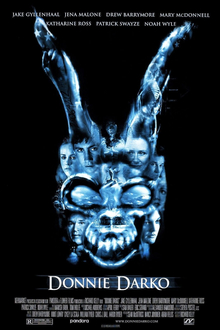
IMDb #202 Review: Donnie Darko (2001)

Source: Wikipedia
There are movies that make you think, “I’m not high/buzzed/stoned enough for this shit.” Then there’s Donnie Darko, which does all three for you. It’s aggressively bizarre, intelligently crass, absurdly intricate. But it cements its status as a cult classic by being wildly entertaining.

How to summarize this madness?

Our titular hero’s an atypical troubled teen, too smart for his own good. Donnie meets Frank, a freaky nightmare dude in a bunny suit who predicts the end of the world. Then a jet turbine drops on Donnie’s house. A smiley demagogue (is that Patrick Swayze?!) enslaves the imaginations of suburban moms and the bitchy PE teacher via cheesy VHS tapes. Characters discuss Graham Greene, Watership Down, and Smurf sexuality. When time travel gets involved, things get kinda complicated.

What's it all mean?

Not knowing is half the fun. There are websites dedicated to unraveling this beautiful mess.

On the one hand, it’s a fun ride, rife with witty lines, realistically dysfunctional relationships, and glorious triumphs of justice. On the other hand, there’s the pseudo-intellectual angle — seriously considering fringe science and depressing philosophies and the relative insignificance of human decisions. On the third hand, a mutant flipper protruding from your blood-spattered bunny suit, there’s the screwy timeline, the schizophrenic visions, and the mind-screw of an ending that requires at least one more viewing to fully appreciate.

Overall, Donnie Darko excels as a highschool misfit flick, suffices as a morbid sci-fi mind-bender. Most of all, it stands as a stupendous conversation starter to showcase your nerd cred.

133 minutes.