Showing posts with label black-and-white movies. Show all posts

Wednesday, September 2, 2015

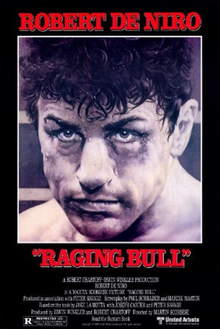
IMDb #113 Review: Raging Bull (1980)

Source: Wikipedia
A boxer's anger issues make and break his life. He blasts through the competition in the ring, but his outside life becomes so awful he wouldn't want to be anyplace else. A bull in a china shop, if broken crockery could sue for damages and file for divorce and hire thugs to pound his face to a pulp.

In the 1940s, while most young men are fighting in the world war, Jake LaMotta fights a war against the world -- and its pesky age-of-consent laws. He picks up a hot blonde teen at the public pool, treats her to a couple shitty dates, and despite his imperiousness and thick head manages to make it work. And withholds coitus to keep energy for fights. Nice going, champ.

Somehow he gets it into his thick head that his wife's cheating. He sure treats her like it. Then flips out when it becomes a self-fulfilling prophecy.

More importantly, he dominates the ring. He conks out opponents, despite small hands. His fast-talking brother manages his madness, though the beast on a short leash drags him places he would never go alone. The brothers share one big thing -- mistreatment of their wives. Them's the forties.

As much as the protagonist punishes everyone else, he punishes himself. Hard diet, hours in the sauna, slimming down to meet the bare maximum for middleweight. For one shot at the title. And if he wins? Sit around, watch TV, get fat. Until the collected rage breaks out and reduces his social life to Bikini Atoll.

Where am I going with this? Good question. Where is this going?

His fame goes nova, and he subsides into the white-dwarf shame of post-celebrity life. He opens a shitty nightclub. Becomes a cringeworthy stand-up comedian. And a jailbird, since it turns out acting on ephebophilia is still illegal.

Robert de Niro acts phenomenally, even when playing a character who's playing a bad actor. The best parts weren't even acting -- the physique, or subsequent lack thereof.

Then it just ends.

What's the point? I don't know. It'a a true story. The guy's still alive. You ask him. I'll...wait here.

129 minutes.

Tuesday, August 25, 2015

IMDb #121 Review: On the Waterfront (1954)

Source: Wikipedia
At the docks, the mobs control who works and who starves, who gets paid off and what cash mysteriously disappears, what stuff gets shipped out and what goods remain suspiciously undeclared. Most importantly, they decide who meets unfortunate accidents for even thinking about breaking the code of silence.

Despite the name, stool pigeons don't fly very well. More stool than pigeon, when dropped off a building they go splat in the street.

Who's gonna care about a dead squealer? Not his friends, not his boss, not even his landlady. No, leave it to his angry little sister. Short on know-how but big on why-I'm-going-to, she vows justice.

She conscripts the help of a Catholic priest, who leaves his cloister to visit the flock at work. This is the type of guy who administers last rites to a guy who just suffered a not-so-mysterious accident right in front of him.

The priest calls special meetings in the church basement. Not for any suspicious reasons, but to implore the longshoremen to consider telling the truth instead of saving their own skins.

Our ostensible hero, Marlon Brando, starts out attending the meetings as a snitch. (See, guys, it's OK when we do it.) Then his dead buddy's sister gets under his skin, the skin he worked so hard to save.

"Johnny Friendly," the mob boss who's anything but, tightens his grip. He tosses the tosser into a crap job in the ship's hold. He tells the hero to lose the girl; the hero tells him to get lost. Which doesn't go over too well.

Then the crucial trial comes up, and what do you think happens. The good guy does the right thing and suffers for it. He's blackballed. His buddy's prize pigeons get their necks wrung -- more than mildly symbolic. Work dries up, as do his friendships. I won't say what pushes him over the edge, only that it leaves him no excuse not to fight back.

The ex-fighter gets back up. He's not D&D, deaf and dumb, like the other guys. He won't throw the second-most important fight of his life. And for all the time it takes to reach the peak, his "fight the power" moment is immensely satisfying.

I guess solidarity can be a bad thing. People are tough to change. Lots of people working together for the wrong reason are tougher. And any brave idiot willing to do the inglorious snitching for a good cause deserves a black-eyed patron saint in Marlon Brando.

108 minutes.

Saturday, August 22, 2015

IMDb #124 Review: Mr. Smith Goes to Washington (1936)

Source: Wikipedia
Washington politics ain't no party. Especially not for a naive nobody from a conveniently unspecified state of the union. He's appointed senator because his simplicity makes him easy to manipulate. Along with being boring and incomprehensible, politics are actively malicious. Like if a Cat's Cradle string sprouted fangs and bit off your hands.

And what dirty things people do for a position whose authority equates to the power of a peep in a cyclone.

When a senatorial office opens up, a crooked politician's son suggests Mr. Jefferson Smith, a Boy-Scout-in-all-but-name (because that name's copyright is violently defended). Thus the squeaky-clean simpleton hops blindfolded aboard the crazy train to the roiling cesspool of government.

His legitimate patriotism worries people. He visits the major and monuments. Takes pictures. And actually seems to like people. The horror.

But rather than financial crises or national employment or foreign policy with the Third Reich, our hero deems the most important issue facing Congress to be his own bill: building a boy's camp in his unspecified state. On land which his fellow senators plan to raze to build a dam, because creating jobs by dubious means is apparently still evil.

Kids love him. Congress doesn't -- they think he's a bumpkin wasting their time, and they're not wrong. (Example: he sends letters to his mother by carrier pigeon.) The press loves to hate him, to twist his honest gaffes into national news. But this same sincerity affects his jaded secretary. Her support changes from compulsory to genuine, and her newfound high-pressure passion threatens to blow the lid off the whole crooked land-grab operation.

Perhaps most famously, and the crux of the story, is Mr. Smith's last ploy to get his personal project across the Senate floor. The filibuster. The way a discouraged optimist can play the political game by the rules and have a chance to beat the cheaters.

Long before Kickstarter kicked off, he appeals to a grassroots effort to bypass bureaucracy. The good citizens of the U.S. of A., who seem to care a lot about congressional procedure (not much on TV back then), send telegrams begging him to bugger off. He keeps gabbing. Without ingesting nutrition or engaging in necessary bodily functions. While the bare minimum quorum of Congress don't even pretend to listen.

He talks so long, he accidentally starts making sense. Even making a difference. Poking guilty hearts, if not cracking calcified minds.

Jimmy Stewart's set of dumbfounded expressions perfectly sell a character who can't be bought.

But does this champion of lost causes achieve anything? Let me ask you. Who directed this picture? There's your answer. Have a swell day, and be grateful you're not watching C-SPAN.

126 minutes.

Tuesday, August 18, 2015

IMDb #128 Review: The Gold Rush (1925)

Source: Wikipedia
Vagaries of fate deposit the Tramp, a contender for the world's most famous fictional hobo, into the freezing North to prospect for gold. Back when Alaska wasn't a state any more than the toothbrush mustache belonged exclusively to Uncle Adolf.

The floppy-footed manchild waddles into a raging blizzard. In a flash of basic intelligence, he seeks shelter in a cabin. Which he shares with a rich miner and a fugitive murderer. Pretty grim for a harmless comedy.

Slapstick happens, because Charlie Chaplin's vaudeville roots run deeper than Alaskan oil reserves. Also like Alaskan oil reserves, he taps that wealth and generates repercussions for the every human/animal/vegetable/mineral in the vicinity. He draws his staying power from the timeless humor of idiots in pain. For example, stranded in the cabin, "funny stuff" entails hilarious starvation and cannibalistic fantasies and unconvincing chicken suits.

When the plot wears thin, it moves the Tramp to a town with more people. And a dance hall, because what what kind of self-respecting old movies lack pointless dance scenes. And women who notice the hobo, because what kind of old movies lack romantic naivete an rambling dream sequences. And a horribly mismatched fight, in which our intrepid hero clocks some big lug in the head with ... a clock.

Bored again, the plot deposits us back where we started, with gold and the fugitive and millions of potential dollars. Not that any amount of money can fix stupid. But it's funny to watch them try (and fail, but mostly try).

Stupidity seems to offer boundless energy, because the poorly-dressed hobo never succumbs to frostbite or diphtheria. It must take acting chops to look that dumb. Because the real man brilliant: writing, directing, producing, editing, starring in, and composing music for just about every movie he made.

For maximum effect, try to get this masterpiece as close to the original as possible. Yes, even with the screechy, scratchy jazz organ soundtrack. It complements the grainy video of jerky antics of a lovable imbecile. Best to think of it as a live-action cartoon, a blurry glimpse into a period when movies were simpler, quieter, and hella weirder.

95 minutes.

Monday, August 17, 2015

IMDb #129 Review: The Seventh Seal (1957)

Source: Wikipedia
In the Middle Ages, Europe must have hit a midlife crisis. Insecurity, instability, irritability. These moods spur the Crusades, the Black Death, and paranoid stupidity that spreads like poison ivy at an orgy. And the people suffering attempt to mitigate the symptoms in the worst ways imaginable ... also like poison ivy at an orgy.

Two Crusaders return to Sweden, weary of life and wary of faith. Their homeland is a wasteland: masses afflicted by plague, mobs accusing witches and burning random women. Actors roam free.

Worst of all, Death himself pays the handsomest Crusader a visit, manifesting as a pasty creep in a black hooded cloak who challenges him to chess. Apparently Death is a stereotypical basement-dwelling nerd.

The Crusader struggles, not with the trials of being ruggedly handsome, but with belief. The Crusades shook him. He can't accept God and can't accept nothingness. Apparently, however, he can accept that Death manifests corporeally and cheats at chess while looking like he has to make curfew at his mom's place in the stygian abyss.

But nobody else knows about this rigged game. The real plot has the Crusader buddies falling in with a group of actors. The man, wife, and young son -- likely representative of a demented Holy Family -- trundle their wagon from town to town performing vaudeville and morality plays. When medieval theater becomes boring (which is quickly), the bored peasants resort to barroom brawls, beating their wives, and the aforementioned witch hunts.

The alpha plot gets complicated when the heroes try to save a witch. The main guy because he wants to ask the devil (through her) about God, the others to save an innocent woman from pointless excruciating fiery death.

Death slinks in the shadows, watching, never getting involved, except for a brief stint as a lumberjack (which makes just as much sense in context).

For Ingmar Bergman? This is straightforward, approachable, and poses legitimate questions about morality and mortality. And best of all it's got a sense of humor as black as the pit. Just don't ask me to explain it, or I'll call up Death the mouth-breather to schedule you a one-way private tour of his anime figurine collection.

96 minutes.

Sunday, August 16, 2015

IMDb #130 Review: Ikiru (1952)

Source: Wikipedia
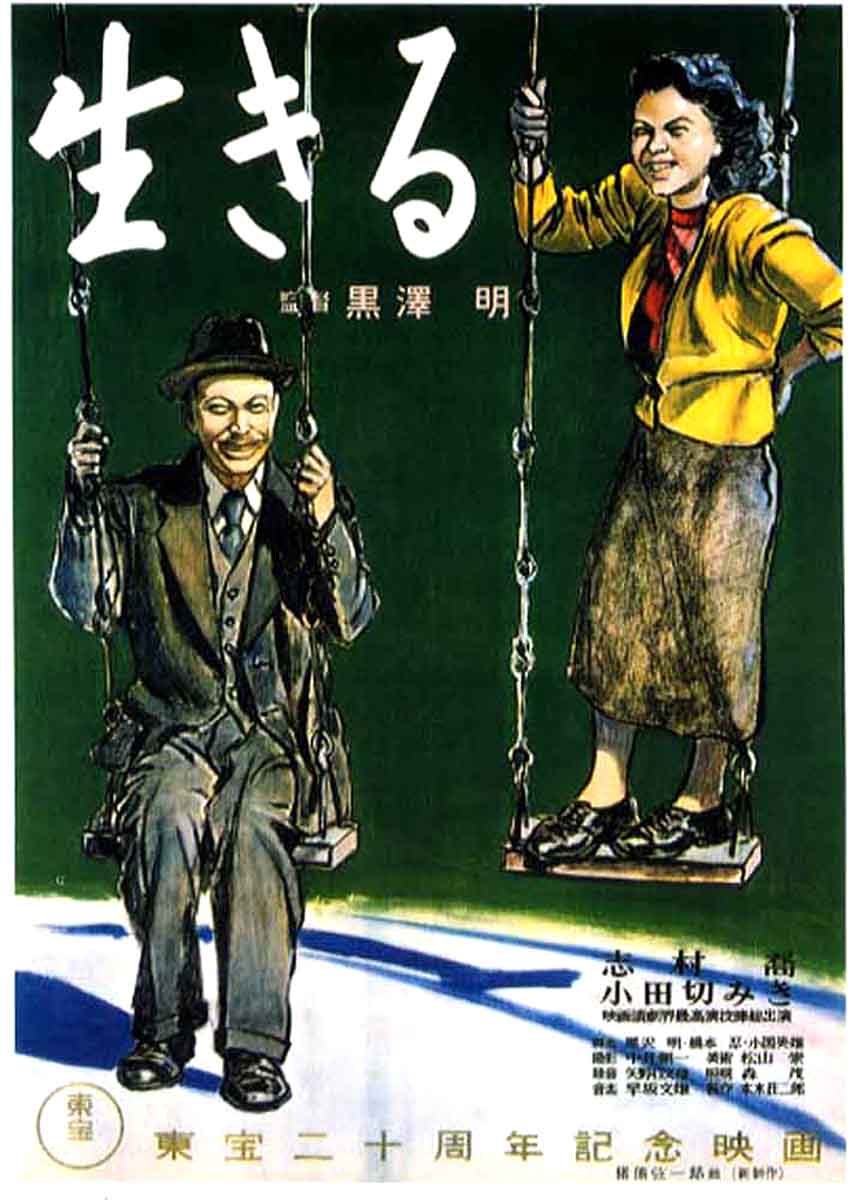
Lowly Japanese bureaucrats move problems around, until the oldest and dustiest of the bureaucrats comes down with a problem he can't move: terminal stomach cancer. Thanks to Japanese politeness, he doesn't hear the fatal news form his doctor, but from a cheerful creep in the waiting room. For some reason he believes him, and for some reason he's right.

What a wakeup call. The man realizes he's felt dead for thirty years, embalmed in dreary routine since his wife kicked it. He gets his first day off, and he doesn't know what to do with it. The title means "To Live," implying he's not very good at it.

Enjoying life is tough when you're uncomfortable in your own wrinkly skin. This guy has difficulty finishing sentences or even maintaining eye contact.

The amazing human raisin hits the nightlife -- not his scene. Undeterred, he hits up a vibrant young female coworker, annoying her till she shares the secret of her seeming happiness: meaningful work. Making stuff you like.

So he returns to dreary drudgery, not disappointed, but transformed. Ready to make a difference in the community. Never before has anybody not running for office taken civil government so seriously. After six months of badgering and one cesspool turned into a public park, he's succeeded at life and subsequently croaks.

The last third is odd. Another stroke of Kurosawa's ineffable genius. Unlike the other "sudden transformation" plots I've seen, this is the first that delves into the befuddlement of family and peers over the sudden transformation. The thoroughly inebriated coworkers decide he didn't know he had cancer. The estranged son and his bitchy wife, who never listened to him anyway, realize he had something important to tell them (I'M DYING) but didn't because they wouldn't listen.

Apparently it requires the threat of immanent death to prompt wheedling, whinging losers to become proactive people who get work done. (Hope you ain't getting any ideas outta this, boss.) Otherwise folks remain entrenched in selfish shortsightedness. Even if his coworkers don't care, the community ladies are profoundly grateful.

Suitably, the depressed and depressing man's favorite song is an old ditty called "Life is Brief." Seize the day, or it'll slip away like a greased hog, and probably defecate on your shoes.

Thursday, August 13, 2015

IMDb #133 Review: The Elephant Man (1980)

Source: Wikipedia
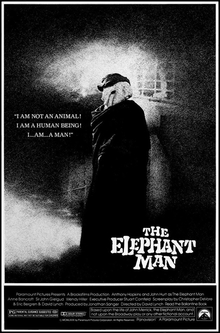
A hideously disfigured gentleman goes from being the gawking curiosity of moral degenerates to...a gawking curiosity for London's rich and famous.

Upward social mobility for the grievously handicapped? Top marks, Victorian England.

An esteemed doctor discovers the poor fellow as a back-alley attraction. He rescues the wheezy bag-headed chap from his cartoonishly evil self-appointed owner.

The elephant man, so named for the herd of elephants that trampled his pregnant mother and thus caused his deformity (dammit, Victorian England), becomes the talk of the Royal Society. And the bane of the hospital wait staff.

Most visitors experience difficulty ignoring the Elephant Man in the room. But slowly, they realize he's human. Kind. Intelligent. Even charming. He cannot leave his well-furnished hospital room, so to bring him into London society, they bring London society to him.

Not that the gutter-dwellers have forgotten him. They plague him, every hobbling step of the way.

One neat thing I noticed: the audience's journey parallels the characters'. For the first half-hour, the camera doesn't display the John Merrick's full face. Suddenly there's a full-frontal view, in all its swollen glory. But, over time, we become acclimated and grow to see the man inside the body.

The presentation adds to the effect. The black-and-white aesthetic recreates the past as seen in old photos, and creates a masterful atmosphere of discomfort. The makeup is horribly convincing. The soft, sweet soundtrack paints an eerie backdrop on the gray canvas. And on that backdrop the cast nails brilliantly nuanced performances. (Except for the gleefully sadistic one-dimensional villains.)

Speaking of which. Having experienced high society only makes it worse when blackhearted bastards drag the celebrity back into a freak show (in continental Europe, so MUCH WORSE). But tragedy leads to triumph, as the other "freaks" -- midgets, giants, conjoined twins -- recognize that he doesn't belong among them, and lend helping hands. Or flippers.

And because the universe is unspeakably cruel, this (admittedly streamlined) true story continues to the bittersweet end.

It's uncomfortable. But, as the uncomfortable becomes comfortable, it becomes uncomfortable to think that I felt uncomfortable in the first place.

124 minutes.

Tuesday, August 11, 2015

IMDb #135 Review: Wild Strawberries (1957)

Source: Wikipedia
A reclusive old grouch, on the momentous occasion he leaves his house to pick up an honorary doctorate, suddenly realizes how much he screwed up his life.

No real friends. Distant from close relatives. Maybe he could try not being a jerk? No, then he'd have to reconfigure his overly formal fifty-year passive-aggressive relationship with his housekeeper. That would be too much.

Despite the housekeeper's protests, he sets off alone in the car. His journey accumulates strange young people. When reality becomes annoying, which is remarkably often, he retreats into his own head. Nostalgic memories, surreal dream sequences, and casual combinations of the two.

He mentally visits his childhood summer home, where wild strawberries grew then but not anymore. (Thematically significant? Nah). As youngsters, he and his manifold siblings read poetry, played piano, tolerated their senile uncle, casually discussed sin and eternity -- y'know, kid things. In Sweden, probably.

Meanwhile, in reality, the car breaks down and they fix it at a gas station and he picks up and subsequently kicks out a bickering married couple. Two college guys, a ministerial student and a doctoral student, a romanticist and a rationalist, debate and eventually fistfight about the concept of God (as if it'll change the nature of the universe).

The old prof, perhaps representative of Ingmar Bergman, slips back into the comforts of incomprehensible dream imagery. Like the one where you're at school taking your doctoral exam and you can't identify the example under the microscope because it doesn't exist and you can't identify the word written on the blackboard because that language doesn't exist either and you can't diagnose the patient on the table because he happens to be unfortunately deceased. You know, that one.

Following the dull doctorate conferral ceremony, the old man returns to his dull, lonely, hateful life. But he receives an uplifting visit from his young road trip companions, who chuck rocks at his window, possibly to remind him that happiness exists and he missed it. (Thematically significant? Who knows.)

91 minutes.

Monday, August 10, 2015

IMDb #136 Review: The General (1926)

Source: Wikipedia
Confederate stereotype Johnny Gray loves his country (the South), loves his train (the titular General), and loves his one-dimensional girlfriend Annabelle Lee (lifted straight from the Poe poem).

The kid's such a good engineer, the military recruiters won't let him enlist. He's bummed. Even more bummed when Yankees hijack his train and accidentally make off with his lady, too.

(Despite his fanatical loyalty to her, she believes the anonymous liars who claim he's a bloody coward too afraid to fight. He's no coward, just a lucky idiot. She, however, is an unlucky idiot.)

He chases them, they chase him back. And that's pretty much the whole movie.

Disappointed? Don't be. The journey's the thing.

Our intrepid hero gives chase on foot, one guy versus a dozen. On foot, by handcart, by hipster bicycle. And somehow he obtains a train. Yankees sabotage the telegraph pole and railway line? He proceeds by tenacity, ingenuity, sheer stupid luck.

He clambers like a monkey over his engine while it's barreling at breakneck (actually break-everything) speed. He puts the "loco" in locomotive. 

Honestly, it's a welcome relief from brutal realism. Blood and guts, moral quandaries, existential angst -- none of that complexity here. Just death-defying stunts, clever hijinks, slapstick in synch with the screechy-scratchy soundtrack. It leaves the tremendous complexity of the Civil War implied, fortunately untouched.

What's included is more important than what's overlooked. Certain details (like sound) aren't there, because they aren't necessary. Like the dialogue, there's plenty of implied talking, but the text cards tell us what they're saying when it's important for the story.

And after days of hard work fighting train-hijacking girl-stealing Dixie-hating Yankees, the army might just let the guy enlist. Congratulations, hero, now you too can go forth and die horribly of some untreatable disease that has nothing at all to do with the war.

75 minutes.

Thursday, July 30, 2015

IMDb #147: Rebecca (1940)

Source: Wikipedia
The classic mystery novel gets the Hitchcock treatment, and miraculously avoids ticking off everything I despise about mysteries.

Not that it makes the heroine any more tolerable.

A typical boring self-insert female protagonist, she unwittingly snares the attention and affection of a handsome, brooding widower on a cliffside contemplating suicide. Thus she transitions from "professional companion" (of a chatty old hag) to a professional spouse (of George Fortiscue Maximilian de Winter, brusque and imperious iceberg whose hidden depths sink relationships and kill people).

The whirlwind romance deposits the boring girl in Oz. Only it's called Manderly, the Munchkins are the dour serving staff, the unhelpful Wizard is her temperamental husband. Also, the Wicked Witch is the deceased previous wife, whose bitter legacy permeates the house and its inhabitants and even the movie title. This Dorothy has no friends. But there is a fluffy little dog, who drags her to a lakeside cottage containing a crazy old lady and rooms full of secrets.

As the boring girl strives for unattainable standards of beauty and sophistication, she hones her remarkable talent for pissing off her husband. Not that it takes much effort. She's awkward, deferential, and he's temperamental, demeaning. REBECCA stands between them, preventing intimacy as effectively as a full-body condom.

So when the authorities find Rebecca's body, and the hole-riddled boat it sank in, thus begin the token mystery shenanigans. Overnight, the situation waxes toward ridiculousness. Was it suicide? Accident? Murder?

The case re-opens in court. The soap opera begins, reducing the boring heroine to blessed irrelevancy with more complex games afoot. Mind games! Pregnancy! Cancer! The plot threads twist until they fray and unravel. The douchebag car-salesman cousin tries to ruin everything with damning evidence. The reticent landlady discovers her inner pyromaniac.

It's a lovely package. Well-paced, well-delivered, well-unwrapped.

The loose plot threads, just enough string to hang yourself, tie up in to a neat knot. And the shaky marriage between abrasive Lawrence Olivier and his girl-of-the-week achieves questionable vindication.

130 minutes.

Saturday, July 25, 2015

IMDb #151 Review: Judgment at Nuremberg (1961)

Source: Wikipedia
The U.S. of A commissions a wise old judge from Middle-of-Fucking-Nowhere, Maine, to relocate to Germany for the incredibly difficult task of legally determining whether the Nazis were bad people.

Not as simple as it sounds.

The defendants -- judges, now undergoing judgment -- were just doing their jobs when Hitler decided to run things. Can these men be blamed for obeying the (flagrantly racist) laws of the land? The prosecution thinks so. Then again, the rabid nationalistic American officers had the delightful pleasure of liberating Dachau. Slight prejudice there.

However, the judges have a kickass defense lawyer. His passion sizzles for justice, loopholes, and moral ambiguity.

These three hours are the slowest burn I've ever seen passed off as a movie. Serious men talk in a room, and occasionally shout. The camera circles speakers like a hungry vulture. Various witnesses occupy the stands: a skittish lady with a sordid romantic history, a chemically castrated old man, and (in spirit) over six million dead Jews.

The lawyers delve into the racist ruling of a past case, harping on minutiae. Until the Americans bring out legitimate Holocaust footage. (In a Bad Things To Do contest, tough to beat genocide.) Somehow, the sad old white guys find the guts to repeat, "Not guilty, not guilty."

As the case wears on, the increasingly weary judge acclimates to postwar Germany. Amid the bombed-out shell of a city, he lives in a mansion, and somehow meets and dines with the widow who used to live there. He also finds it to be in poor taste to ask the serving staff about the concentration camps.

Did the German people know the extent of Hitler's atrocities? Good question. The kickass defense lawyer indicts the whole world, who knew of the Nazi party's intentions years in advance, yet did nothing. And the Americans, who nuked Japan. He demands to leave a shred of dignity, of autonomy, for the German people. As if that's an easy thing.

But the old backwoods judge feels he must vote his conscience. Especially if the decision is unpopular.

All in all: gray, gray, gray. Not just because the movie's in black and white. Not because it's white guys in dark suits sitting in a room. But because the morality is so obscure, the presentation so dry, and the outcome so bleak.

So this (fictionalized) judge votes his conscience for these (fictionalized) war criminals. In one major sense the film parallels reality: by the time this movie was made, the (real) decision didn't matter anymore anyway.

179 minutes.

Friday, July 24, 2015

IMDb #152 Review: It Happened One Night (1934)

Source: Wikipedia
Yet another spoiled heiress flees from yet another wedding. Yet another Joe Schmoe reporter unknowingly cozies up to her and wheedles his way into getting the biggest scoop of his hack career.

If it sounds cliche, it's because this exquisitely preserved cinematic mummy established the cliches.

Some parts are different. The girl jumps off her dad's Navy boat and swims to shore, so she's kind of a badass. She meets her smartly-dressed smartass by falling asleep on his shoulder on the overnight bus, so she's kind of clueless.

The guy, however. He skips an hour of pointless misunderstandings and tells her outright: he's a journalist, he knows who she is, and he's here to help her out. Which frees up more time for G-rated sexual tension when they have to share a room (rope + blanket = Wall of Jericho, apparently). Fortunately, they're frighteningly natural at marriage roleplay -- they have the bickering down pat.

While the unhappy couple crosses the Eastern Seaboard on $4, the rich father sics detectives on her. And gets the newspapers involved.

This girl's abrupt disappearance makes front-page news. Never mind the Depression, or rampant unemployment, or Chancellor Hitler's rise to power -- the general public is more interested in the boringly plush lives of the rich and famous. (Who can blame them.)

The guy teaches the girl the joys of ordinary life. Budgeting, waiting in lines, not missing buses, telling off creepers, and being told no. Meanwhile, she teaches him patience and complex journalistic ethics and effective hitchhiking technique (hike up the skirt -- the limb is mightier than the thumb, indeed).

Since this groundbreaking talkie practically rooted itself in the cement foundation of romantic comedy, you can probably guess how it ends. Innocuously. When the odd couple reunites with her father and the groom-to-be, and they have to part at last, and then--

A car chase. You got me, movie.

The title still makes no sense. What happened? And they were gone more than one day, so which night? Unless they refer to sexytimes. (This was pre-Hays code.) Which only makes things more complicated, because how are we supposed to know what night things happened or didn't. Thanks for taxing our brains with a romantic comedy, Frank Capra.

105 minutes.

Monday, July 13, 2015

IMDb #163 Review: The Maltese Falcon (1941)

Source: Wikipedia
Back in the golden slate-gray age of film noir, a hard-boiled detective could hunt for a plot device just by engaging shady characters in lengthy expositional dialogues.

The stuff gleaned from that conversation is then invalidated by the next conversation, not to mention garbled by Humphrey Bogart's signature drawl. Awfully often, we hear one side of a phone conversation and have the pleasure of extrapolating the other half. And then, from this succession of half-conversations, we somehow extrapolate a classic movie.

Sam Spade is a private dick "too slick for [his] own good." (Finding unintentionally hilarious innuendo makes old movies so much more fun to watch. Other gems: "You're a good man, sister," and "I've taken all the riding from you I'm gonna take." Collect them all!)

When SS's unlikable partner loses an argument with a bullet, and so does the dude his partner was tailing. Now that it's gotten semi-personal, our alliterative detective takes up the case.

How does he do it? Well, he mumbles a lot, and mumbles fast. He only smiles ironically, and the rest of the time he emotes about as much as a stroke victim encased in concrete. With these intimidation tactics, he casually drops vaguely worded intel. The nervous nellies fill in the rest. To get the truth, Bogie slaps it out of men, obliges womanly wiles, and follows up every lead on the missing Maltese "dingus" (as he calls it -- what'd I tell you about innuendo).

The spiffy gents in fancy suits wade him into a swamp of murky morality. As an archetypical detective, he's more interested in getting paid than bringing criminals to justice (or so he claims).

As for the titular plot device? The introductory text scroll sells a hackneyed backstory about the Crusades and a gift to Charles V of Spain that fell afoul of pirates, or some such drivel. Some dame asks Bogie what it's made of, and he replies, "The stuff dreams are made of." Intangible ideals, self-deception, and 8 mm film. But things people will cheat and kill and shell out the big bucks for.

And occasionally jabber about little to nothing for 100 minutes out of 101.

101 minutes.

Thursday, July 9, 2015

IMDb #167 Review: The Wages of Fear (1954)

Source: Wikipedia
In the event you find yourself dangling over the pen of a zillion flesh-eating hamsters, your response is threefold. First, you panic. Understandably. As you adjust to your situation, you grow calm, maybe even bored. Amid the doldrums of the second stage, you slip into the third. A surge of elation from impending rescue. Or, more likely, things turn to shit, and you tumble to a slow nibbling death from a zillion tiny incisors.

There was a movie to talk about, wasn't there.

Right. Four poor white guys in South America need cash fast, so they take a job nobody else wants. They drive nitroglycerin trucks across the jungle. On a deadline. With zero safety equipment. And, in one case, without driving experience.

It's tough, grueling, manly work. Which means sweat-soaked tank tops plastered to chiseled torsos. (Difficult to see, because this movie looks like it was recorded through the translucent bottom of a grease-smeared milk carton.)

What's most amazing is how, once the trucks take off, the suspense stretches out for the last two-thirds of the movie. How do they do it? Characters.

There's the requisite handsome hero; his portly mustachioed roommate named Luigi (before Atari, before Pong, but not before the invention of retrospective irony); a pretty boy who survived the Nazi camps; and Mr. Jo, an aging rogue who clings to his tenuous existence via shameless cowardice.

Any significant women? Well, one, back in the village of poverty and giant spiders and copious wipe transitions. She's a coy, fey woman-child who exists to be unimportant and endure horrible treatment from the handsome hero and adore him anyway. (Pretty disgusting by today's standards.)

Anyway, these MANLY MEN rumble over bumpy stretches of unpaved road, slog through mud, and teeter over the brink of cliffs. The two truck drivers ascribe to opposite philosophies. "Danger? Slow down!" -- "Danger? Floor it!" Guess who drives in front.

Expect gratuitous close-ups of speedometers, gearshifts, tires ... and subtitles. The dialogue wanders among half-a-dozen languages, so hope you like subtitles.

What will these brave idiots sacrifice for two thousand dollars? Life? Limb? Yes, preferably other people's lives and limbs.

After all that buildup to the inevitable cathartic explosion, can be pretty draining. It almost renders the final delivery unsatisfying. But once I got past the anticlimax, the real ending clobbered me. When the end card popped up, I felt so cheated I just about exploded.

131 minutes.

Sunday, June 28, 2015

IMDb #178 Review: Touch of Evil (1958)

Source: Wikipedia
After the most splendid tracking shot in cinema history, a rich couple's car goes kablooey on the US-Mexico border. This kicks off an international investigation packed with more crime and drama and backstabbing than the crime that started it all.

Two butthead cops, naturally, butt heads.

Orson Welles plays the gruff, tough, cigar-chomping celebrity detective who relies on hunches. Charlton Heston, meanwhile, carries on the grand movie tradition of beefy white Americans failing to impersonate foreigners. He's *allegedly* a mustachioed Mexican cop named Vargas, on honeymoon with his full-blooded blonde American wife.

This casting transgression is the only funny part in the movie, so treasure it.

As I'm-Totally-A-Mexican sinks deeper into his work, he deposits his lovely lady at a sketchy resort motel in the pristine wasteland. Which, surprise, belongs to the local mobsters totally not responsible for the bombing. Never mind the nitwit running the front desk. Cue the kidnappers.

Meanwhile, the buttheads chase the case. Dynamite missing from a construction site? Evidence mysterious manifests in the prime suspect's personal effects. Fat-Dumb-American accuses So-Fake-Mexican of protecting his fellow countryman. Fake-Mexican accuses Fat-American of planting evidence. Not a recipe for success, just headaches. So many headaches that the ex-boozer Welles turns into an ex-ex-boozer.

Crippled by this infighting, the sloppiest joint investigation in history deteriorates further. Fake-Mexican is understandably distracted by his missing wife, once he finally realizes she's missing.

Ultimately, it's the classic contrast between the by-the-book cop and the one who gets his hands dirty. (Not always mutually exclusive categories.) But with the car bomb, the break for work, kidnapping, international squabbles, and the ugly morally-complex solution, we have yet another contender for the shittiest honeymoon ever.

112 minutes.

Friday, June 26, 2015

IMDb #180 Review: Diabolique (1955)

Source: Wikipedia
What a high-as-balls Edgar Allen Poe would've scrapped for being too far-fetched, France cheerfully delivers. Or so I hope, because it's funnier that way.

There's this headmaster. He's a Grade-A asshat: a belligerent, tyrannical, spouse-smacking, booze-swilling misogynist.

Understandably, his timid little wife wants a divorce, so she can ditch him and keep the school. Understandably, he declines -- so he can keep the school and keep schtupping the sultry schoolteacher.

But surprise! The mistress wants the rotten bastard dead too. Together the women lure him out to the city, drug him, and drown him in the noisiest hotel bathtub in Paris. All seems well. Until the body disappears without explanation.

The resulting panic brings a strange cocktail of morbid mystery and surreal hilarity. Oh no, the swimming pool ate the body! Oh no, his suit returned from the dry cleaner, with the incriminating hotel key tucked in the jacket pocket! Oh no, his ghost is haunting the school picture! Oh no, there's a retired police detective skulking about and he thinks things are weird as shit which they totally are!

The wife/mistress squabbling sessions, always fantastic entertainment, get meaner and nastier. The guilt-ridden widow, suffering a heart condition, falls ill. Nightmares won't let her sleep. And a walking nightmare terrorizes the academy -- not the bratty boys infesting the place, but the mysterious figure stalking the halls late at night and pecking away on the headmaster's typewriter.

It's that kind of psychological thriller. A slower burn than those dedicated fireplace channels.

Finally, the mystery cracks under the weight of all the bizarre conflicting evidence. Out pours the shittiest, most contrived twist ever crowbarred into a serious story. I felt robbed. Cheated. Then the moviemakers stuck a cheeky warning label as the end card, not to spoil this movie for your friends.

Screw them. Five seconds of Googling can fix that. But I'll spare you the shame of knowing.

114 minutes.

Monday, June 22, 2015

IMDb #184: The 400 Blows (1959)

Source: Wikipedia
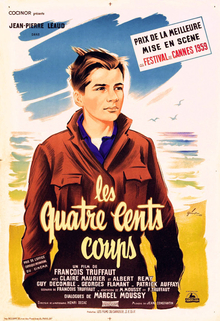
A prepubescent Parisian delinquent ravages his native France. Which might be interesting if the kid weren't dumb as a sack of bricks.

Presumably, the title refers to the four hundred slaps bestowed upon the boy. Every hit is almost justified, because he's behaving horribly to already horrible people. The harsh schoolmaster, the demanding mother, the temperamental father, each have their system of petty demands.

This kid is an awful student and a worse delinquent. He shamelessly plagiarizes a Balzac essay (which the class is studying at the time). When he gets tired of failing at school, he forges sick notes to play hooky. Not that his alternatives sound much more fun: fairground rides, puppet shows, black-and-white French movies. When he gets tired of his parents, he runs away -- at Christmas, when Europe's hella cold.

He and his blonde best bud indulge in underage smoking and drinking and...backgammon? Anyway, his bud keeps finding the anti-hero a crash pad (printing place? my place? sure!), and his reward is eternal separation from his best friend/charity case.

It doesn't help that the kid's an inveterate kleptomaniac. He takes what he likes when he likes: his parents' cash, unguarded milk, a typewriter, and the aforementioned Balzac passage. Not that the brat ever gets away with anything.

Other punishments include verb conjugations, movie tickets (surprise, prospective parents, rewarding shitty behavior doesn't work), the drunk tank, and an observational center for delinquent youth. Does any of this work? Well...

In juvie, the pint-sized sociopaths teach him smart crime. Such as painting himself in a positive light for psychological evaluations, and, more importantly, how to sneak out under the fence. Finally, the kid listens to someone for five minutes.

Being French, this film presumably aims for anticlimactic realism, and nails the target every time. The plonking, squawking soundtrack feels appropriate for the era. So does the plot, moving at the speed of nitro-injected escargot.

And because it's a French movie, no married couple can appear onscreen without a notable instance of infidelity. (DAMMIT, FRANCE, I THOUGHT YOU WERE BETTER THAN TO MEET MY SHITTY EXPECTATIONS.)

99 minutes.

Wednesday, June 17, 2015

IMDb #189 Review: Sin City (2005)

Source: Wikipedia
In Frank Miller's neo-noir wannabe Vegas, grittiness masquerades as realism, but pulls it off with such style it's tough to resist succumbing to entertainment.

The extended edition features several stories, told out of chronological order. They focus on different festering wounds of human morality, but feature the same bitterly heroic triumph. Hope you like end credits--you'll see 'em three times (four, counting a punchy short film). Acceptable, because the end credits theme is fantastic.

If you've read the graphic novels, it's practically a shot-for-shot adaptation. The same dudes get plugged from the same camera angles. The same cynicism chokes the atmosphere. The same dialogue sparkles with blindingly poetic polish. Frank Miller's obsession is still whores setting back feminism several centuries.

Like goodness in a horrible world, the modified black-and-white emphasizes splashes of color. Blood, fat red lips, more blood, and a certain deformed yellow midget (not a racist metaphor, probably). Optimism is crushed, beauty abused, nobility punished. Every vice you can imagine gets its moment in the spotlight, which falls off the lighting grid and shatters and showers the audience in scalding glass shards.

Some disparities stick out like broken thumbs. Such as reconciling the stylized violence with the purported realism. And portraying strong woman sexually -- such as the armed-to-the-teeth prostitutes of Old Town -- masks exploitation as empowerment. It just replaces one fantasy with another, admittedly cooler fantasy. Also, lady nipples are apparently Hollywood kosher, but male genitalia is a big wrinkly no-no.

Even if you despise the stories, the twisted characters are worth it. Talented actors portray these cartoons with such aplomb, it's mesmerizing, and almost believable. Too much verisimilitude would spoil the effect anyway.

124 minutes.

Tuesday, June 16, 2015

IMDb #190 Review: The Grapes of Wrath (1940)

Source: Wikipedia
A destitute farming family moves to keep from starving and getting pushed around by rich jerks in Dust Bowl Oklahoma--so they can starve and get pushed around around by rich jerks in California.

They travel Route 66 in their crappy truck packed with everything they own. The grandparents drop off. With grim determination and rustic wisdom, the family chases vague promises of shitty jobs. (Spoiler: the jobs are even shittier than advertised. The living conditions are worse. And it only gets shittier from there.)

Along the road, store proprietors take pity on the weary rustics and their hungry children, who resemble grubby refugees from a Dickens novel. The small business owners dispense underpriced candy and brusque charity.

The truck gurgles and lurches into California, the promised land of milk and honey. But the honey's thin soup and the milk is filthy water, and the only promise left unbroken is the ever-deflating wages for picking fruit. Okie transient camps pop up, terrorized by overzealous militia police on the corporate payroll. But the little people stick together.

A grim pallor of "God is dead" hangs over the whole shebang, not just because a major character is a lapsed preacher. Like the dust choking the crops, tangible desperation strangles any hope of lasting happiness or relief from suffering. But the people soldier on--because they must.

As a lucky sap who never read the book in high school, I liked the adaptation. John Ford's black-and-white contributes to mood, aided by subtly ingenious lighting. The titular trampled grapes ferment into a  fine wine of bittersweet existentialism. Which means it tastes awful but sits nicely and aids bowel movements.

129 minutes.

Sunday, June 14, 2015

IMDb #192 Review: Persona (1966)

Source: Wikipedia
WHAT THE UNFATHOMABLE FUCK WAS TH--oh, it's over already. Cool.

As summarized above, the Swedes toss us another bizarre psychological drama sandwiched between montages of surreal imagery. It just oozes bullshit symbolism. Film reels; giant spiders; baby lambs; dead people; a sad boy reading in bed; crucifixion. What does it mean, Ingmar Bergman. Who cares, you're dead.

The discernible story involves an actress. She cuts off communication with the outside world, by writing or speaking or even emoting. A nurse tends to her, then takes her on a beach trip. To get the actress talking, the nurse starts talking. A lot. The one-sided conversation waxes terrifyingly personal, such as orgy stories and other such dalliances.

When the actress finally speaks, it turns out--surprise--she's an insufferable bitch. This display is just another act.

SUDDENLY DANCING SKELETON SUITS, SCREECHY MUSIC, MORE CRUCIFIXION, WHAT THE HELL AM I WATCHING?

Back to monotone conversations. This I can handle.

The best/worst scene sticks in my head. A whole conversation lingers on a still shot of one woman's expressionless face. Then, the film repeats the same conversation, just aimed at the other woman's face. The acting is so subtle you might miss it entirely.

Rambling conversation bandies about various themes: fluidity of identity, the pains of pregnancy/abortion/childbirth, nihilism. Sometimes, the philosophically dense girl-talk breaks out in physical violence, as they tend to. The nurse shakes the actress, beats her against a table, slaps her, scrapes her fingernails on her arm, draws blood, sucks the blood...

No, I did not understand this movie.

In the end, the actress and nurse realize they are the same. I think.

Because clear communication would ruin the artsy fun.

84 minutes.